
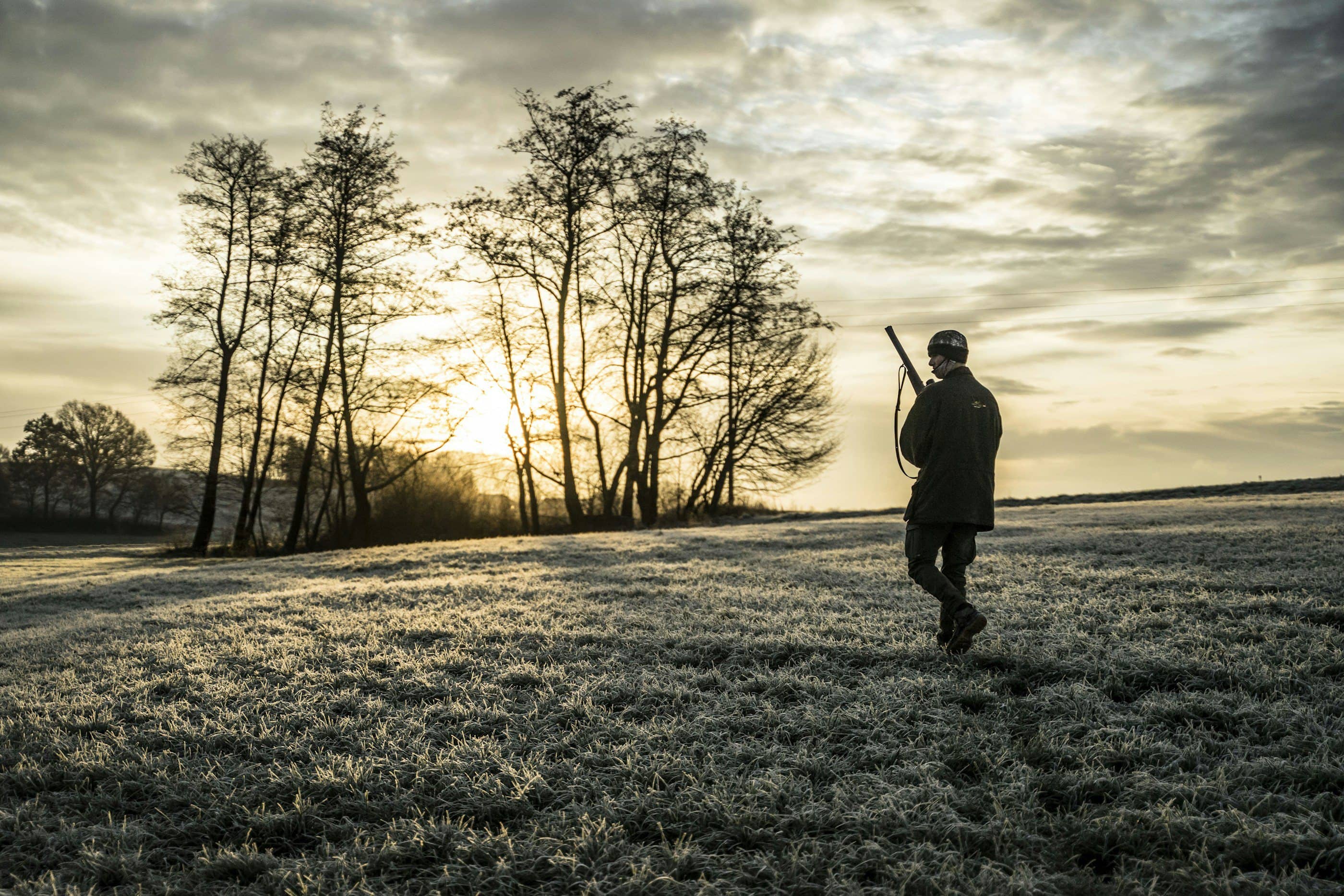
Your first driven shoot as a guest: the day, dress and etiquette
From the morning welcome to honouring the game at the end of the day: what is expected of a guest on a private driven day in France, at the peg and at the table.
Last updated 13 October 2026 · 7 min read
A private driven day in France begins with the welcome and the safety briefing, continues with several drives broken by lunch, and ends with the display of the bag, where the game is honoured. On a driven boar and deer day, every participant, armed or not, wears high-visibility clothing, as French regulations require. For a guest, dress is warm and understated, and the etiquette comes down to a few things: be on time, keep discipline at your peg, respect the game, your host and the people who prepared the day.
How a driven day runs
A battue is a collective shoot: the guns stand in a line, while beaters and their dogs work a wood or a stretch of open ground, called a drive, pushing the game towards the line. The day strings several drives together under the authority of a shoot captain, whose word is final from the first horn to the last.
In the morning, everyone meets over coffee. The captain gives the briefing, known in France as the rond: safety rules, which quarry may be shot that day, the signals for the start and end of each drive. Pegs are then allocated, often by drawing numbers, and you walk or drive to yours.
Drives follow one another, longer for boar and deer, shorter and more numerous for pheasant and partridge. Lunch is taken somewhere warm, at the shooting lodge or at the estate's table. At the end of the day, the bag is laid out: hats come off, the game is honoured, and the day closes quietly.
| Moment | What happens | What is expected of you |
|---|---|---|
| Welcome | Coffee, introductions, papers checked | Be on time, with licence, validation and insurance certificate |
| Briefing | Safety, permitted quarry and signals | Listen to the end, ask your questions then |
| Peg draw | Numbers drawn or guns placed by the organiser | Accept your peg, locate your neighbours as you arrive |
| Drives | Beaters and dogs push the game towards the line | Stay at your peg, keep quiet, shoot only in safe arcs |
| Lunch | Somewhere warm, at the lodge or the estate | Gun unloaded and put away, relaxed conversation |
| Display of the bag | The game is laid out and honoured | Hat off, stay discreet, thank those who prepared the day |
Safety at the peg
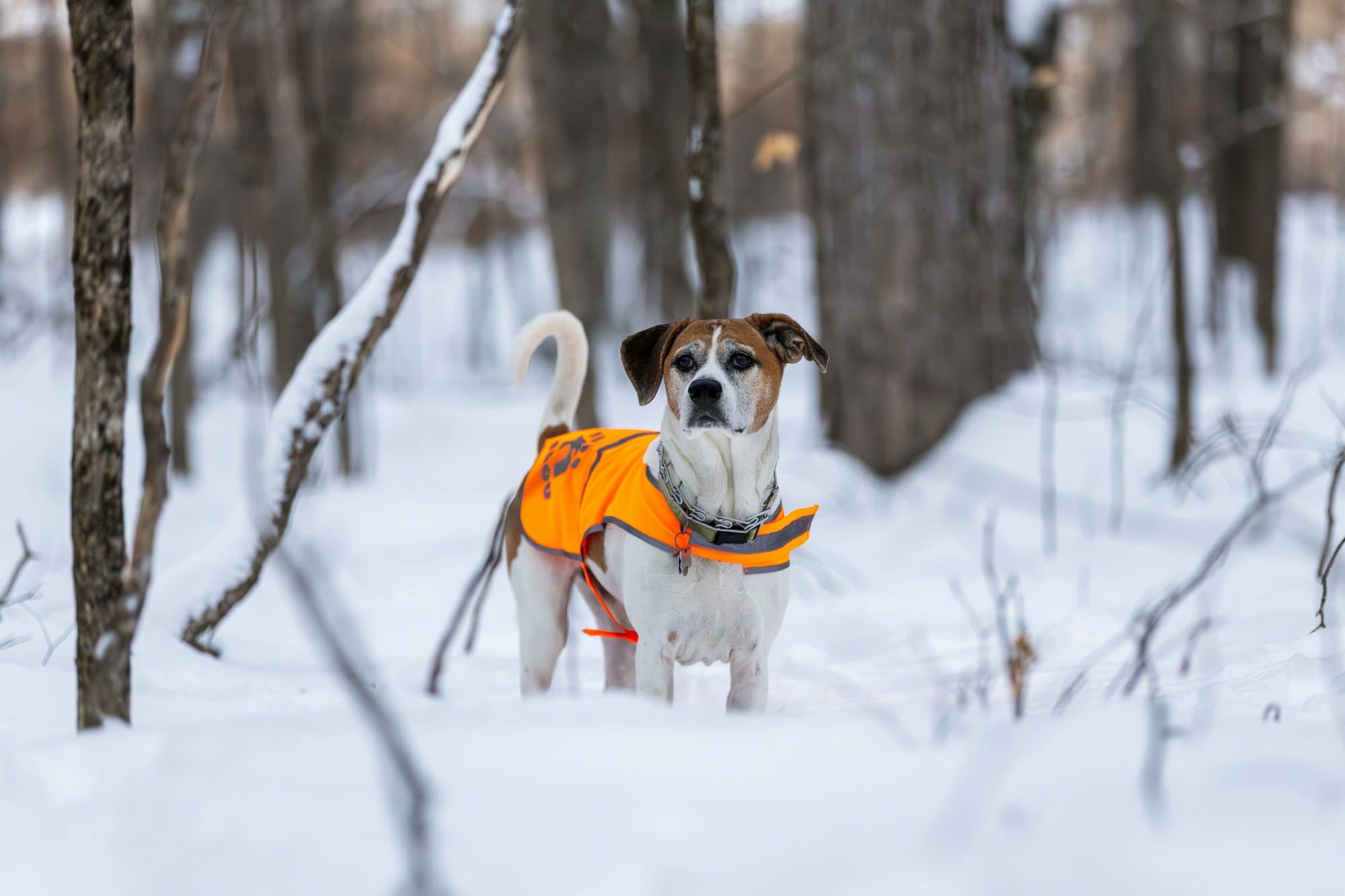
Safety is not a formality: it is what allows a driven day to exist at all. On a driven boar and deer day in France, a high-visibility vest or garment, worn visibly at all times, is compulsory for everyone present, including those who are not carrying a gun; the French Biodiversity Agency (OFB) recommends orange. Temporary signs mark the shoot at the main entrances to the area and on public roads.
At the peg, locate your neighbours as soon as you arrive, do not leave your place before the end-of-drive signal, and never shoot towards a neighbouring peg, a road, a public path, a house, a railway or a power line. The OFB recommends never shooting within a 30° angle either side of each neighbour: this is a national recommendation, which the departmental game-management plan can make compulsory. Many organisers include it in their briefing.
Between drives, the gun is unloaded and open, or slipped, as the captain directs. These instructions, specific to each ground, always come first: they are given at the morning briefing, and following them to the letter is the surest way to be invited back.
What to wear on a driven shoot
The rule is simple: warm, understated, quiet, and suited to a full day outdoors, often standing still at the peg. On a driven boar and deer day, a high-visibility vest or jacket over your clothes is compulsory; organisers usually provide them for their guests. On a driven pheasant or partridge day, woodland tones, greens, browns and tweed, remain the tradition unless the organiser asks otherwise.
Wear several layers rather than one heavy garment: you get cold at the peg and warm on the walk. Waterproof boots or shoes, thin gloves that let you feel the trigger, a hat or cap, ear protection and shooting glasses complete the outfit. Bring dry clothes and a pair of shoes for lunch, which is often served at the table.
| Item | Driven boar and deer | Driven pheasant and partridge |
|---|---|---|
| High-visibility garment | Compulsory for everyone, armed or not, visible at all times | As the organiser directs |
| Clothing | Warm, quiet layers | Woodland tones, tweed, an understated shooting jacket |
| Footwear | Waterproof boots or shoes with good support | Waterproof boots or shoes |
| Protection | Ear protection, shooting glasses | Ear protection, shooting glasses |
| For lunch | Dry clothes, clean shoes | Dry clothes, clean shoes |
Shooting etiquette at the peg and at the table
Driven shoot etiquette comes down to a few habits. Be on time, because a line does not move off until it is complete. Keep quiet at the peg and leave your phone in your pocket. Shoot only the quarry announced at the briefing, and only when it is safe. Leave your neighbour's bird to your neighbour. Do not shoot low, nor at a bird that is too close.
The game is respected from the first shot to the display of the bag. You do not comment on a neighbour's miss, you tell the keeper about any animal that may have been hit so that it can be found, and you take your hat off at the end. At lunch, talk about the day by all means, but never to count the bag.
Finally, give thanks: to your host, the keeper, the beaters, the dog handlers and the loader who stood with you, without whom there would be no day. If you are someone's guest, a handwritten note in the days that follow is customary; a considered gift for your host, a book or a bottle, is welcome, without ostentation.
Tipping the keeper
It is customary to thank the keeper, and sometimes the beating team, with a tip at the end of the day; the loader assigned to you is thanked separately, in person. It is almost never included in the price, and there is no set scale: the amount depends on the day, the ground and the estate's own customs. It is given discreetly, by hand or in an envelope, as you shake the keeper's hand on leaving.
If you are the guest of a host who has taken the day, ask them discreetly: some hosts cover the tips themselves, others leave each gun to see to their own. When we arrange your day, we tell you the custom before you arrive, and we can also take care of it for all your guests.
The papers to carry with you
When shooting in France, you must carry your hunting licence, its validation for the period and your current hunting liability insurance certificate. Validation is handled by the departmental hunters' federation, for a year, for nine or for three consecutive days. If you live abroad and hold a hunting licence from your own country, it can be validated in France for nine or three days, subject to the approval of the relevant federation.
Bringing guns into France follows precise customs rules, which differ depending on whether you live in the European Union or elsewhere. We explain the right procedure for your country of residence well before you travel, and paperwork takes time: we recommend contacting us several weeks before your preferred date.
If you have never shot before
A first driven day can be enjoyed without a gun. Non-shooting guests can spend the day alongside the guns, at the peg, following the safety instructions set by the organiser and, on a boar and deer day, wearing high-visibility clothing like everyone else. It is often the best way to understand a day before taking up a gun.
For a first taste of shooting, a clay shooting lesson with a qualified coach can be arranged privately at an affiliated club, often that same morning. It does not replace a hunting licence, which requires training and an exam, but it teaches the right habits. We are happy to put together a private day that brings experienced guns, guests new to shooting and non-shooting guests around the same table.
Frequently asked questions about your first driven shoot
Warm, understated, quiet clothing in several layers, waterproof boots or shoes, thin gloves, ear protection and shooting glasses. On a driven boar and deer day, a high-visibility vest or jacket is compulsory for everyone; on a pheasant or partridge day, woodland tones remain the tradition unless the organiser asks otherwise. Bring dry clothes for lunch.
On a driven boar and deer day, yes: a high-visibility vest or garment, worn visibly at all times, is compulsory for everyone present, armed or not. The French Biodiversity Agency recommends orange. On a driven bird day, follow the organiser's instructions.
It is a recommendation from the French Biodiversity Agency: do not shoot within a 30° angle either side of each neighbour. The departmental game-management plan can make it compulsory, and many organisers include it in their briefing. Shooting towards roads, public paths, houses, railways and power lines is prohibited.
There is no set scale. Tipping the keeper, and sometimes the beaters and the loader, is a custom, rarely included in the price, and the amount depends on the day and the estate's habits; our guide to the cost of a private day gives a published benchmark. Ask your host; when we arrange your day, we tell you the custom before you arrive.
Yes. A handwritten note in the days that follow is the safest custom. A considered gift for your host, a book or a bottle, is welcome, without ostentation; if your host is a company, the note goes to the person who invited you.
Most often by drawing numbers after the briefing, sometimes by the organiser placing the guns. Once at your peg, locate your neighbours, stay put until the end-of-drive signal and keep to the safe arcs you were given.
Yes, without a gun: a guest can stand with a gun at the peg, following the safety instructions and, on a boar and deer day, wearing high-visibility clothing. To shoot without a licence, a clay shooting lesson with a qualified coach at an affiliated club is the right way in. Shooting game yourself requires a validated licence and insurance.
Every shooting day and guide
Plan your private day
Tell us who is coming, who will shoot and who will accompany, and where you are travelling from. We reply personally, with complete discretion: we choose the ground with you, brief you on clothing, papers and customs, and coordinate everything around the day.