
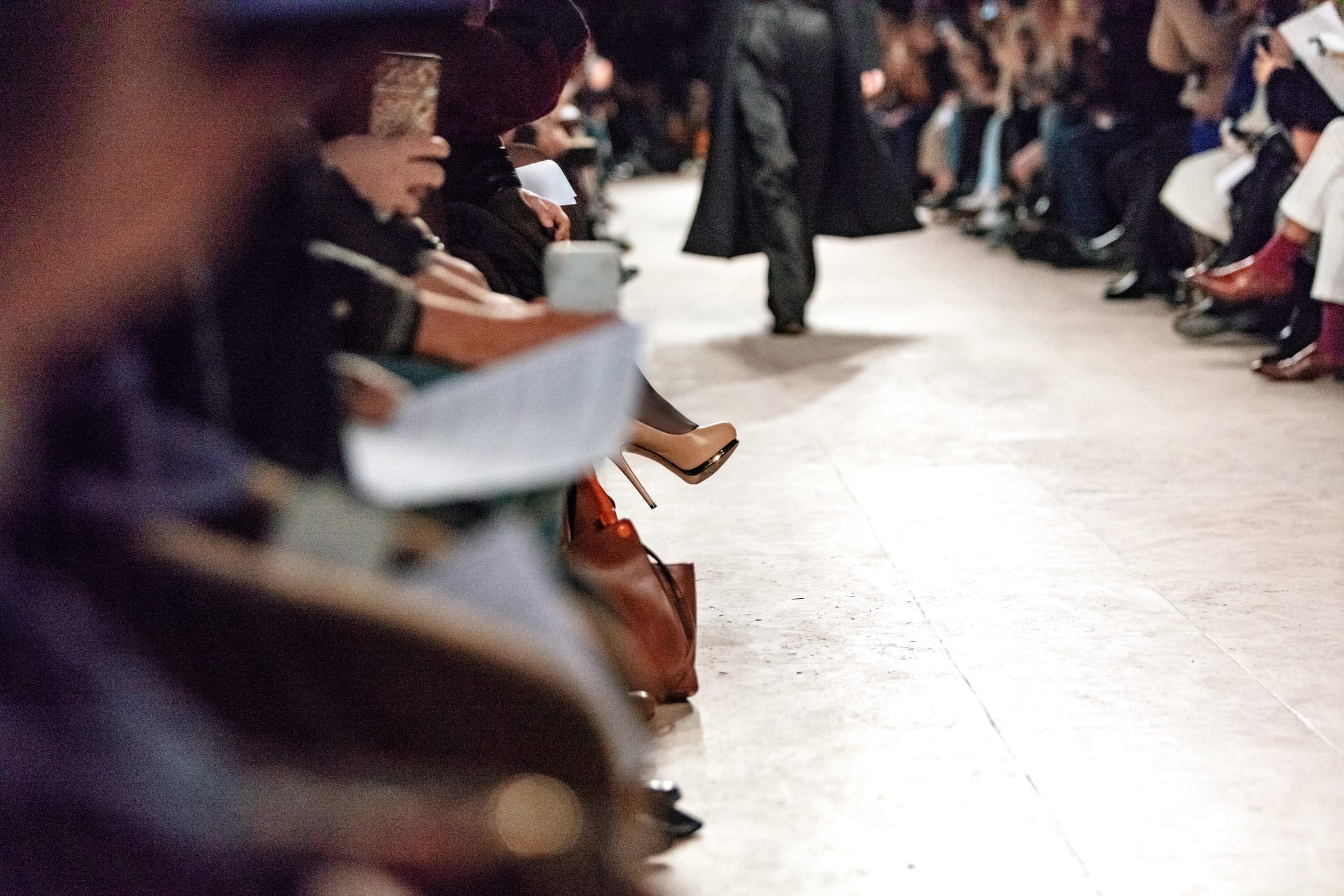
How do you attend New York Fashion Week?
There is no public box office: these are the genuine routes in — and everything the week offers without an invitation card.
Last updated 5 October 2026 · 6 min read
There is no public ticketing for the New York Fashion Week shows: the shows on the CFDA calendar are professional, invitation-only events, and invitations are nominative and non-transferable — they are not for sale. The legitimate routes are to be a client of a designer or brand, to belong to the professional networks of the fashion industry, or to have a request transmitted through private relationships — where possible, after review of the client's profile, never with a promise. Without an invitation, the week remains rich: in recent seasons, public screenings of shows at Rockefeller Center, boutiques and showrooms, personal shopping in private salons, great tables and evenings through private channels subject to availability. Be wary of any "runway ticket" sold online: it is the surest sign of an illegitimate offer.
The truth first: there is no public box office
The shows on the New York Fashion Week calendar — set by the CFDA (Council of Fashion Designers of America), which owns the Fashion Calendar, and published a few weeks before each edition — are professional, invitation-only events. Seats go to the press, to buyers, to clients and their guests; invitations are nominative, non-transferable, and issued by each designer or brand for its own show. They are not for sale — not at a box office, not online, not "through a connection".
This guide reviews the routes in that genuinely exist, and — just as important — everything the week offers without an invitation card. One point of clarity from the outset: TGZ Conciergerie is an independent house, unaffiliated with the CFDA (Council of Fashion Designers of America), with any fashion house or brand, or with the organisers of New York Fashion Week shows and events, holding no official status. We sell no access — we compose what can be composed through legitimate private channels, and we tell you plainly what cannot.

Route 1 — Being a client of a designer
The most natural route is the client relationship. Designers and brands reserve a share of their invitations for the clients they know: those they dress, receive in showrooms and private salons, whose wardrobes they follow. That relationship is not conjured up the day before a show — it is built over time, through acquisitions, fittings, boutique appointments and bespoke commissions.
This is where personal shopping takes on its full strategic meaning: serious accompaniment during the week — appointments with the brands' teams, access to pieces subject to availability, an ongoing relationship season after season — nurtures precisely the kind of bond from which invitations sometimes arise. Our page Personal shopping during New York Fashion Week details these formats. But the rule remains absolute: an invitation is always the designer's sovereign decision — never an entitlement, never an automatic quid pro quo.
Route 2 — The professional networks of fashion
The second route is professional: press, buyers, retailers, stylists, photographers, industry institutions. If your work is in fashion, requests are made through your business relationships and the brands' press offices and agencies, season after season — each designer arbitrating according to the capacity of the venue and its own priorities.
If your work is not in fashion, no serious intermediary will promise you a professional status of convenience. Attempts to circumvent the system — false credentials, recycled invitations — end in refusal at the door: the lists are nominative, the checks strict, and guests' identities verified at the entrance. A successful week is not built on that risk.

Route 3 — Private relationships and invitations
Each season, invitations circulate beyond the first circle: partner brands, agencies, production companies, the designers' own relationships. It is through these legitimate private channels that a request for a show or a presentation can sometimes be transmitted for a private client — where possible, after review of the client's profile, subject to availability and to validation by the issuer of the invitation.
No honest concierge will present this route as a product to be booked: the CFDA calendar is published only a few weeks ahead and still moves, every invitation remains nominative and non-transferable, and the final decision never belongs to the intermediary. Our page New York Fashion Week runway shows & invitations details this framework and how we work — requests placed early, transparency about the probabilities, and genuine alternatives prepared in parallel so the evening is a fine one whatever the answer.
What you can experience without an invitation — and it is considerable
The week is not reducible to the runways. In recent seasons, the CFDA has partnered with Rockefeller Center so that the public can watch shows on screen there — a legitimate public route, its format confirmed season by season. The boutiques of Madison Avenue and SoHo dress their windows, some presentations open on registration, and the movement outside the downtown venues is part of the city's spectacle.
Then come the experiences we compose without any card being required: personal shopping in private salons and showrooms, a styling day in your suite, the great tables where the industry gathers — The Polo Bar, Torrisi, Le Bernardin, cited by way of illustration —, private dinners with a chef, and evenings through private channels subject to availability. Our page New York Fashion Week after-parties and our complete guide to New York Fashion Week give the full picture of this ecosystem.
Many of our clients leave with this conviction: the finest part of the week — the showrooms, the tables, Manhattan in its winter light — never depended on an invitation.
The warning: "runway tickets" sold online
Each season, platforms offer "tickets" or "runway packages" for New York Fashion Week for sale. The rule is simple: since invitations to the shows on the CFDA calendar are nominative and non-transferable, a runway ticket that is for sale is, by definition, illegitimate. Sometimes these are peripheral events with no connection to the CFDA calendar, presented ambiguously; sometimes recycled invitations that end in refusal at the door, with no recourse.
What to remember: access to a show is received — from a designer, a partner, a professional status — and is never bought; the private routes exist, are worked on well in advance, and are always presented with their reservations. The rest of the week can be composed freely, and that is where a successful stay is played out. Our guide How much does a VIP New York Fashion Week cost details it line by line; our page New York Fashion Week 2027: concierge, stay & private events gathers the whole.
Frequently asked questions
No. The shows on the CFDA calendar are professional, invitation-only events, and invitations are nominative and non-transferable: they are not for sale. Any "runway ticket" offered online should raise immediate suspicion — it covers either peripheral events presented ambiguously or recycled invitations refused at the door.
Through three legitimate routes: being a client of a designer or brand — a relationship built over time, through acquisitions and showroom appointments; belonging to the professional networks of fashion (press, buyers, institutions); or having a request transmitted through private relationships, where possible, after review of the client's profile. In every case, the decision rests with the designer and nothing can ever be promised.
No — and be wary of anyone who claims otherwise. Invitations are issued by the designers and brands, nominative and non-transferable; no intermediary holds them for sale. A serious concierge transmits requests through legitimate private channels, speaks of access "subject to availability and validation", assesses each profile candidly and prepares genuine alternatives when a route is closed.
A great deal: in recent seasons, public screenings of shows at Rockefeller Center in partnership with the CFDA, the windows of Madison Avenue, Fifth Avenue and SoHo, presentations open on registration, personal shopping in private salons and showrooms, the great tables of the industry and private dinners, and evenings through private channels subject to availability. No card is required to compose a dense week.
Brand parties belong to strictly private channels: nominative invitations, closed lists, never any ticketing. Certain evenings and dinners can be composed through relationships and tables, subject to availability and validation — a club such as Zero Bond admits only members and their guests. Our page New York Fashion Week after-parties details what can genuinely be composed — and what should never be promised.
No. TGZ Conciergerie is an independent house, unaffiliated with the CFDA (Council of Fashion Designers of America), with any fashion house or brand, or with the organisers of New York Fashion Week shows and events, holding no official status. The addresses named are cited by way of illustration. We sell neither tickets nor invitations: we compose the stay and transmit requests through legitimate private channels, with complete transparency about their limits.
Take it further

A Fashion Week in New York, composed with candour
Tell us what you wish to experience during the week: we will tell you what is possible, what is not, and compose the rest — grand hotel, chauffeurs, personal shopping, tables, evenings — on quotation.