
Private Jet for Formula 1
Following Formula 1 across the world — the season is the journey; the jet is simply how you keep pace.
Last updated 5 October 2026
A modern Formula 1 season runs to around 24 rounds, with back-to-back weekends and triple-headers across continents — which makes following more than a race or two a private-aviation problem, not a scheduled-flight one. As your advisor, TGZ plans the whole season and points to our Monaco Grand Prix hospitality for the flagship.
A 24-round calendar is the real challenge, not any single race
The modern Formula 1 season has grown to around 24 rounds spread across roughly nine months — from the season openers in the Gulf and the Far East to the November finale under the Abu Dhabi lights. Attending one race is simple; following a campaign is a logistics problem that redraws itself every few weeks.
What defeats a scheduled-flight plan is the shape of the calendar rather than any one venue: back-to-back weekends, and the occasional triple-header of three races on three consecutive weekends, sometimes on different continents. Friday running in one country and a Sunday race two time zones away leave no slack for a missed connection or an airline schedule built for someone else.
This is where private aviation stops being ornamental and becomes the practical tool. The point is never the aircraft — it is arriving rested and on your own clock, round after round, so a season reads as one continuous trip rather than twenty separate expeditions.
Triple-headers, back-to-backs and the empty legs between them
The season's hardest stretches are the paired and tripled rounds. A European midsummer can run Silverstone, the Hungaroring and Spa within three weekends; the late-season flyaways pair up across the Americas, Asia-Pacific and the Gulf. These are precisely the weekends where scheduled routes fail to line up.
Back-to-back rounds also open a quieter efficiency. An aircraft that carries one group to a race often has to reposition afterwards, and those repositioning flights — empty legs — sometimes align with the very hop you need between two consecutive rounds. When the timing fits they are a far more efficient way to cover a leg; when it does not, a booked aircraft keeps the plan intact.
Reading the calendar as a whole, instead of one race at a time, is what makes these openings visible before they close.
The glamour rounds, and the quirk that shapes each arrival
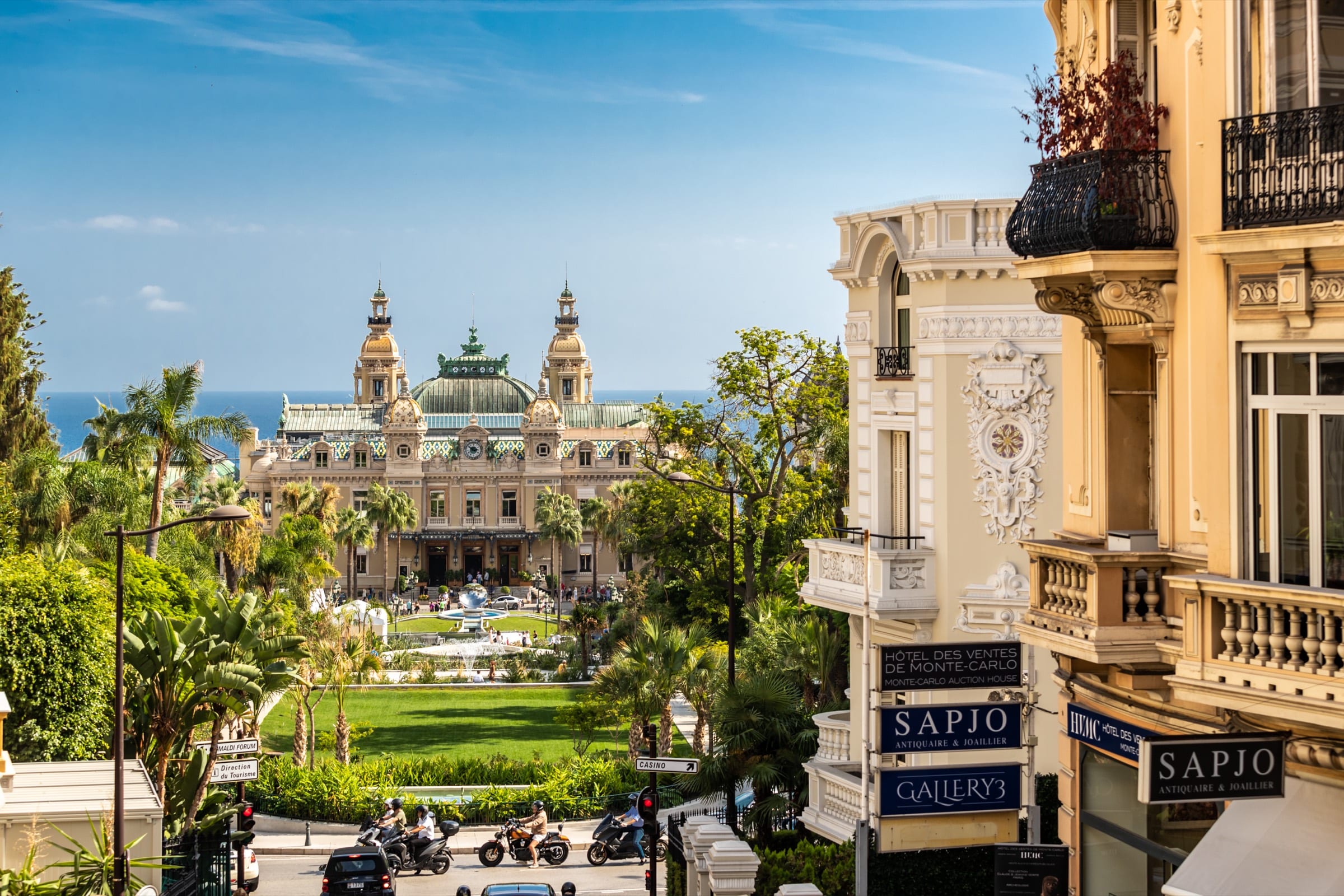
A handful of rounds carry their own arrival signature. Monaco has no airport of its own — you land at Nice and finish by helicopter, the flagship weekend we handle in full on our Monaco Grand Prix page. Las Vegas runs down the Strip on a Saturday night, so the crowd and the executive terminals at Harry Reid and Henderson clear in the small hours. Singapore is a floodlit night race reached through Seletar; Abu Dhabi closes the year under lights at Yas Marina, with Al Bateen minutes from the circuit.
The nearest business-aviation gateway for a selection of the season's marquee rounds — the final miles by car, helicopter or boat are part of each arrival:
| Round | City | Business-aviation airport | Note |
|---|---|---|---|
| Monaco Grand Prix | Monaco / Monte-Carlo | Nice Côte d'Azur (NCE) | No local airport; finish by helicopter — see our Monaco page |
| Las Vegas | Las Vegas | Harry Reid (LAS) / Henderson Executive (HND) | Saturday-night race; late finishes on the Strip |
| Singapore | Singapore | Seletar (XSP) | Floodlit street night race |
| Abu Dhabi | Abu Dhabi | Al Bateen (AZI) | Season finale at Yas Marina, under lights |
| Monza | Milan | Linate (LIN) | High-speed temple near Milan |
| Silverstone | Silverstone | Luton (LTN) / Farnborough (FAB) | British GP; heavy race-day road traffic |
| Miami | Miami | Opa-locka (OPF) | Spring round at Hard Rock Stadium |
Matching the aircraft to the leg across a global season
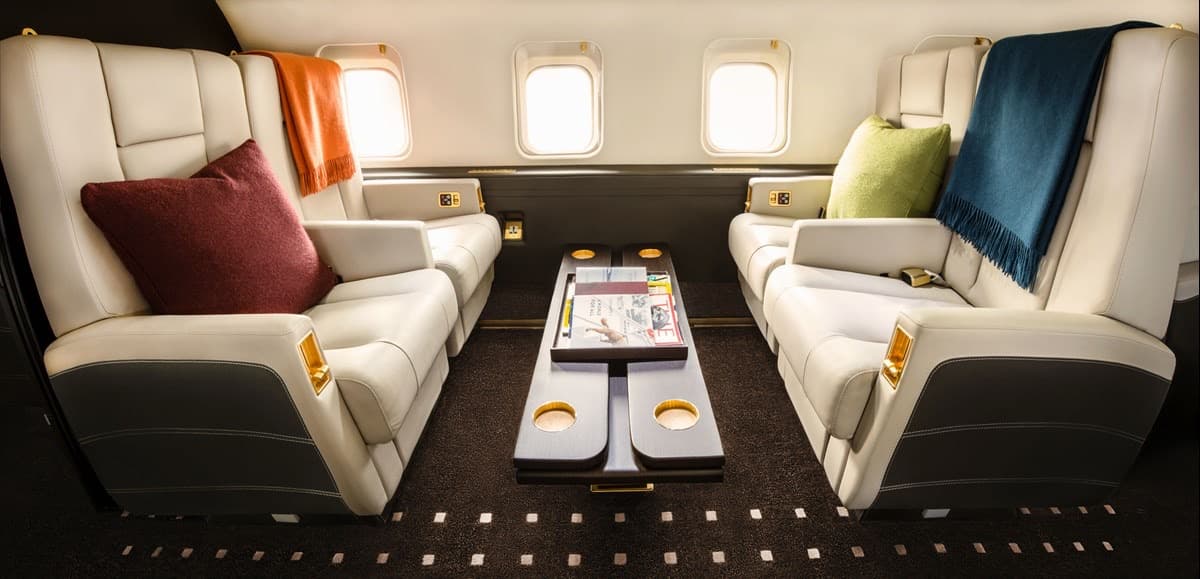
No single aircraft suits a whole campaign. The European rounds are frequently short hops where a light or midsize jet is the natural choice; the intercontinental flyaways — the Gulf, the Americas, the Asia-Pacific swing — call for the range and cabin of a heavy or ultra-long-range aircraft. The right category is a per-leg question, not a season-long one.
Which category earns its place on a given leg comes down to distance, the size of the party and its luggage, and how tightly the round sits against the next. Our guides to how private aviation works and what it costs set out those categories and the market ranges behind them, round by round.
Across a full season these choices compound, which is why the useful conversation is about the campaign as a whole rather than one flight seen in isolation.
Where the racing itself is handled
The difference between a grandstand seat, a paddock pass and a hospitality suite is not an aviation question — it belongs to the hospitality side of the sport and is sourced separately. For the season's flagship, our Monaco Grand Prix hospitality covers the terraces, the harbour and the paddock; access at the other rounds is arranged alongside the travel, never mistaken for it.
Private aviation itself can be reached several ways — on-demand charter, a jet card, fractional or full ownership — each suited to a different flying rhythm. As an advisor rather than an operator or broker, TGZ weighs the number of rounds you intend to follow, recommends the model that fits and arranges it through a global network of certified operators, tied to selling none of them.
The jet is only the first link
Frequently asked
As many as your calendar and appetite allow — the constraint is rarely a single race but the paired and tripled weekends. Private aviation is what makes three flyaway rounds on three continents in as many weeks practical, arriving rested each time rather than losing days to connections.
Because the calendar is built for a global television audience, not for the fan chasing it in person. Back-to-back rounds and triple-headers hop between continents on tight windows, and scheduled routes simply do not connect them cleanly. A private aircraft flies to your schedule, not an airline's.
Monaco has no airport at all — you arrive through Nice and finish by helicopter, covered in full on our Monaco Grand Prix page. Las Vegas races on Saturday night with late finishes, Singapore runs after dark through Seletar, and Abu Dhabi closes the year at Yas Marina with Al Bateen minutes away.
Sometimes, and it is worth checking. Aircraft repositioning after one race occasionally align with the exact hop you need to the next. When the timing fits, an empty leg is a markedly efficient way to cover a back-to-back; when it does not, a chartered aircraft holds the schedule.
Usually more than one category. European rounds tend to be short hops suited to a light or midsize jet, while the intercontinental flyaways call for the range of a heavy or ultra-long-range aircraft. The right choice is decided leg by leg, on distance, party size and timing — our aircraft-category guide sets out the options.
Yes, through our hospitality rather than as a ticket reseller. For the flagship Monaco round, our Monaco Grand Prix hospitality covers the terraces, the harbour and the paddock; access at the other rounds is sourced the same way, arranged alongside the travel rather than through it.
Everything for your private flight
A Formula 1 season to follow?
Tell us which rounds you want to be at and how each weekend should feel. We plan the season as one moving itinerary — the flights when they are the right means, the stays, the transfers and the access — and point you to our Monaco Grand Prix hospitality for the flagship. One advisor, from the opener to the finale.