

Private Jet Charter in New York
A year-round city with its own clock — the US Open, the Hamptons, the winter flight south.
Last updated 5 October 2026
New York is a year-round bespoke-travel capital under the country's busiest private-aviation airspace. Teterboro, minutes from Midtown, is the reference field, and the signature arrival is a short helicopter hop across the Hudson to a Manhattan heliport. TGZ plans the whole stay around it — the flight is just one line.
New York keeps its own clock
London has a season and Miami has the sun; New York has a calendar that never fully empties. Spring brings the auctions and the galas; September stacks three demands into one month — UN General Assembly week closes streets and slices of airspace across Midtown, Fashion Week fills the hotels, and the US Open runs late into the night out in Queens. Then the holidays, and, in the depth of winter, the city thins as its regulars move on.
That rhythm is the real brief. A stay is planned around which wave you are arriving into — a quiet week in early summer asks for almost nothing; UN week or the US Open asks for weeks of notice — and the flight is arranged to fit the city, not the other way round. For the tennis itself, the seats and the late-night timing, our US Open page goes deeper.

The country's busiest business-aviation airspace
No region in the United States moves more private aircraft than New York, and the field that defines it is Teterboro (TEB), just across the Hudson in New Jersey and minutes from Midtown. That popularity is also its constraint: at peak periods Teterboro manages arrival and departure slots, and it observes night-time noise and curfew limits — so timing is planned around them, or the aircraft is sent to a quieter field.
The ring of airports around the city each has a job. Westchester (HPN) serves the northern suburbs, Greenwich and Connecticut; Long Island MacArthur (ISP) is the door to the Hamptons and eastern Long Island; Newark (EWR) sits to the west and takes the largest aircraft; and John F. Kennedy (JFK) carries the long-haul international legs. The field is chosen for the door you are heading to — and, the part a commercial arrival never offers, the aircraft parks at a private terminal where a car or a helicopter is already waiting: minutes, instead of the immigration hall and the taxi line.
| Airfield | Code | To Manhattan | Best for |
|---|---|---|---|
| Teterboro | TEB | ≈ 15–40 min by car · ≈ 5 min by helicopter | The default — closest business field to Midtown |
| Westchester | HPN | ≈ 45–60 min | Northern suburbs, Greenwich and Connecticut |
| Long Island MacArthur | ISP | ≈ 75–90 min | The Hamptons and eastern Long Island |
| Newark Liberty | EWR | ≈ 20–40 min | West of Manhattan; takes the largest aircraft |
| John F. Kennedy | JFK | ≈ 45–75 min | Long-haul international arrivals |
The helicopter is the last mile
New York's signature move is not the jet at all — it is what happens after it lands. From Teterboro, a helicopter crosses the Hudson to a downtown or Midtown heliport in about five minutes, turning a bridge-and-tunnel crawl into a glance at the skyline. It is the difference between arriving in the city and arriving above it.
The same logic rules the summer weekends. From late spring, Friday afternoons empty toward the East End, where the Montauk Highway can turn a Hamptons run into a three-hour crawl; the East Hampton helicopter makes it in roughly forty minutes. For many it stops being a flourish and becomes the only sane way to be at dinner in the Hamptons the same evening — and, at summer's close, courtside at the US Open.
Summer to the East End, winter south and west
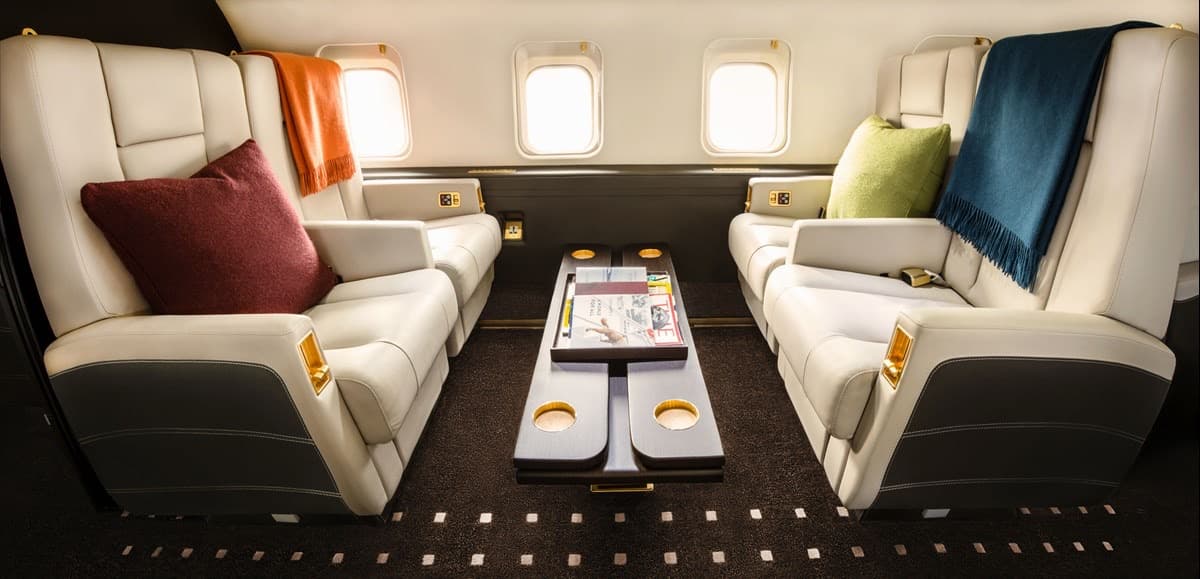
New York is best understood as the hub of a migration. Through summer the weekend axis runs east to the Hamptons; from December the regulars move out — west to Aspen for the ski weeks around the holidays and New Year, south to Palm Beach for the winter season and on to Miami. These corridors are among the most heavily flown in the country, which is exactly why they reward planning: an empty-leg positioning flight, when your dates have any give, can turn one of these well-worn routes to your advantage.
The route also sets the aircraft. A weekend to Palm Beach or a ski week in Aspen is a midsize or super-midsize hop; a crossing from Europe or the Gulf is a heavy or ultra-long-range leg. To see how the categories and the numbers work, our aircraft and cost guides lay them out plainly.
The jet is a tool, not the trip
Underneath all of it, the flight is a means, not the point. TGZ is an advisor rather than an operator, a broker or a card seller: on-demand charter, jet card, fractional and full ownership each suit a different flying rhythm, and the right one depends on how often and how far you actually fly. The relevant model is recommended and arranged through a global partner network, then folded into the wider plan — the suite above the park, the tables, the transfers, the security when it is called for.
How the arranging works — operators, certification, what sits behind a quote — is set out in our how-it-works guide, alongside the rest of the private-jet hub. The flights are flown by certified operators; the journey stays with TGZ.
New York — frequently asked
Teterboro (TEB), just across the Hudson in New Jersey, minutes from Midtown — and the launch point for the five-minute helicopter hop to a Manhattan heliport. Westchester (HPN) suits the northern suburbs and Connecticut, Long Island MacArthur (ISP) the Hamptons, Newark (EWR) the largest aircraft, and JFK the long-haul international legs.
Yes. As the country's busiest business-aviation airport, Teterboro manages slots at peak periods and observes night-time noise and curfew limits. It rarely changes the plan — arrival and departure timing is simply arranged around it, with Westchester or Newark as alternatives when Teterboro is tight.
A commercial JFK arrival means the terminal, the immigration hall, baggage and a taxi queue into traffic. A private arrival means the aircraft parked at a private terminal where a car — or a helicopter to a Manhattan heliport — is already waiting. It is minutes rather than the better part of two hours.
Easily, and many do. From East Hampton a helicopter reaches a Manhattan heliport in about forty minutes, against a Montauk Highway drive that can stretch past three hours on a summer Friday — enough to spend the day at the beach and be in town for the evening. The US Open, at summer's end, is covered in depth on its own page.
New York empties south and west from December: Aspen for the ski weeks around the holidays, Palm Beach and Miami for the winter season. These corridors are heavily flown, so early planning pays — and when dates are flexible, an empty-leg flight can sometimes optimise the trip and its cost.
It depends on the route and the aircraft. A transatlantic crossing in a heavy or ultra-long-range jet and a domestic hop in a midsize do not call for the same quote; positioning, airports and season move it too. Our cost guide breaks the drivers down; we quote your actual trip.
Everything for your private flight
A New York stay to plan?
Tell us what brings you — a September of the US Open and UN week, a summer between the city and the Hamptons, a winter that ends in Aspen or Palm Beach. We'll plan the stay end to end — the flight when it earns its place, the transfers, the suite, the tables and the access.