
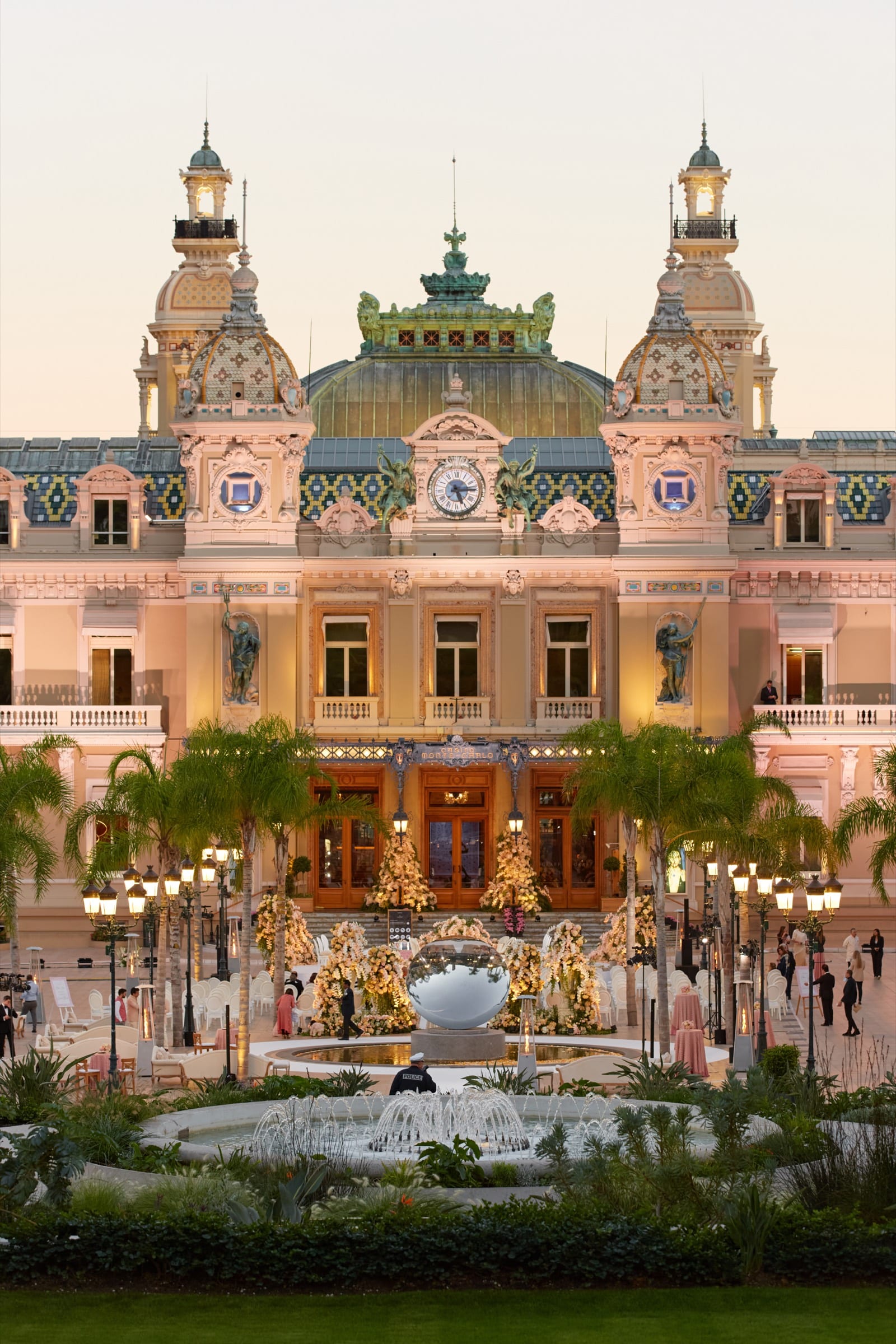
Private Jet to the Monaco Grand Prix
Arriving low over the coast, the harbour already in view — the flight is only the opening move.
Last updated 5 October 2026
Monaco has no airport. You land at Nice (NCE), then fly the seven-minute helicopter to the Fontvieille heliport (MCM). Grand Prix week in late May is the most saturated aviation window on the Riviera, so arrival timing — and booking months ahead — decides the trip. The vantage over the track belongs to our Monaco Grand Prix hospitality.
Monaco has no runway of its own
The Principality is barely two square kilometres wedged between the mountains and the sea, and it has never had an airport. Every arrival by air ends at Nice Côte d'Azur (NCE), thirty kilometres west along the coast — the busiest business-aviation gateway in Europe and the true front door to the Riviera. What happens after you land is what separates a smooth Grand Prix from a frustrating one.
From Nice, the signature last hop is a seven-minute helicopter flight to the Fontvieille heliport (MCM), skimming the coastline straight into the heart of the Principality. A coastal chauffeur covers the same ground in around thirty minutes when traffic allows — but during race week the lower corniche clogs, and the helicopter is usually the surer bet on time. We hold both options open and switch by the hour, according to your luggage, your schedule and the state of the road.
The most contested week in Riviera aviation
Grand Prix week, in the last days of May, is the single highest-demand aviation slot on the whole coast — ahead of Cannes and the summer peak. Nice's business-aviation apron fills, the helicopter shuttles run back to back, and departure and arrival slots are rationed. Aircraft parking is the quiet constraint few anticipate: with the ramp full, many jets drop their passengers and reposition to park elsewhere until it is time to fly home.
Cannes–Mandelieu (CEQ), twenty minutes further west, absorbs the overflow when Nice is saturated — a useful pressure valve for lighter aircraft, though it closes at night and handles no large jets. The practical takeaway is simple: this is not a week to arrange late. Securing the aircraft, the slot and the helicopter seat months ahead is what keeps the arrival calm rather than scrambled.
Arrival timing: beat the Thursday crush, dodge the Sunday wave
The Monaco calendar has its own rhythm, and knowing it is half the battle. Track action builds from Thursday's first practice to Sunday's race, and the inbound wave peaks with it. Arriving early in the week — Tuesday or Wednesday — means a fluid apron and an unhurried transfer, before the qualifying-day rush. The mistake is to fly in Thursday or Friday morning, straight into the tightest slots of the week.
The return leg is where most trips come undone. When the chequered flag falls on Sunday, the entire paddock reaches for the same helicopters and the same departure slots within a couple of hours — the worst bottleneck of the week by a wide margin. Holding your departure to Monday morning turns a stressful scramble into a calm, clear-sky exit. The table below sets out how we usually time it.
| Window | What to expect | Our counsel |
|---|---|---|
| Tue–Wed before the race | Apron and helicopter shuttle still fluid | Ideal arrival — settle in ahead of the crush |
| Thu–Fri (practice, qualifying) | The peak inbound wave; slots tighten sharply | Workable, but book far ahead and allow buffers |
| Sunday, within hours of the finish | The whole paddock departs at once — the week's worst bottleneck | Avoid if you can; the scramble is real |
| Monday morning | Traffic clears, skies open | The smoother return leg — hold your departure here |
Where you watch is a separate question
The great Monaco decision is not how you arrive but where you watch from. A berth on a yacht moored in Port Hercule, the cars threading the harbour chicane below you, is a wholly different day from a terrace suspended above the swimming-pool complex or the climb to Casino Square. That vantage question — yacht, terrace, grandstand or apartment balcony — sits with our Monaco Grand Prix hospitality, where the access and the views are chosen and secured. This page deliberately stops at the harbour's edge.
What we weave around it is the rest of the week: a villa on Cap-Ferrat or a suite in Monte-Carlo, the dinner tables that vanish months out, a day drifting to Èze or Saint-Tropez by tender, the discreet security when it is warranted. The Monaco you already know and the wider coast around Nice become one itinerary, with the flight as a single thread among many rather than the point of it.
The right aircraft, and the return-leg gift few think of
The aircraft that suits a Grand Prix party depends on where you start and how many you are. A light or midsize jet answers a European hop into Nice; a larger cabin makes sense for a transatlantic or Gulf leg, or for a group travelling together — and matching aircraft categories to the party is a conversation worth having before anything is booked. On-demand charter, jet cards, fractional and full ownership each fit a different flying pattern, and the right one depends on yours.
Grand Prix week also creates a quiet opportunity on the way home. With so many aircraft repositioning empty off the Riviera after the race, the return leg is fertile ground for empty legs — a repositioning flight going your way, worth weighing when the timing fits. As your advisor rather than an operator or a broker, we point to the most sensible solution and arrange it through our network of vetted partners, keeping the whole week — arrival, race, table and return — under one hand rather than a dozen.
The jet is only the first link
Monaco Grand Prix by private jet — frequently asked
Monaco has no airport of its own. Every private flight lands at Nice Côte d'Azur (NCE), thirty kilometres along the coast, then reaches the Principality by a seven-minute helicopter to the Fontvieille heliport (MCM) or a chauffeur of around thirty minutes. Cannes–Mandelieu (CEQ) serves as overflow for lighter aircraft when Nice is full.
Arrive Tuesday or Wednesday, before the Thursday–Friday practice-and-qualifying wave floods the apron. Above all, do not try to leave in the hours right after Sunday's race — that is the single worst bottleneck of the week, when the whole paddock departs at once. Holding your return to Monday morning makes for a far calmer exit.
Months, not weeks. Late May on the Riviera is the most saturated business-aviation window of the year: apron parking, departure slots and helicopter seats are all rationed. Booking early secures the aircraft, the timing and the transfer; leaving it late means working the network for whatever remains.
Yes — that is the heart of what we do, but it lives on a different page. The vantage itself — a Port Hercule yacht, a terrace over the circuit, a grandstand or a private balcony — is handled by our Monaco Grand Prix hospitality. This page covers the arrival and the surrounding week; the two are planned together by the same advisor.
During race week, usually yes. The coast road slows to a crawl, while the helicopter covers Nice to Fontvieille in about seven minutes. A chauffeur stays a comfortable choice outside peak hours or when you prefer to stay on the ground. We keep both open and decide by the day, around your luggage and schedule.
Yes. We match the aircraft category to the size of the party and the luggage, and coordinate several helicopter rotations or cars on arrival so no one waits. Families, friends or a delegation stay together from Nice through to Fontvieille and across the whole Grand Prix week.
Everything for your private flight
A Grand Prix week to plan around the race?
Tell us where you set off from and your dates for Monaco. We plan the whole week — the arrival through Nice, the helicopter or chauffeur into Fontvieille, the timing that avoids the Sunday crush, the villa and the tables, the return leg home — and open our Monaco Grand Prix hospitality for the vantage over the track. The flight is one thread; the week is the point.